China Top 10 Two Seat Small Car Manufacturers?
China’s Two Seat Small Car market has become a practical laboratory for affordable urban mobility. Small bodies, narrow turning circles, and modest batteries define this category. Yet appearance can mislead. A stylish cabin does not always mean dependable ownership.
This guide examines ten notable Chinese manufacturers through several useful lenses. These include vehicle range, charging time, battery chemistry, safety equipment, cabin comfort, production experience, and after-sales support. Models from Wuling, Chery, Baojun, Geely, Dongfeng, Changan, Leapmotor, Zhidou, Kandi, and JAC may serve different buyers. Some focus on low-cost city travel. Others offer stronger technology or export potential. Details matter, such as rear visibility, door strength, winter range, and the space beside a supermarket trolley.
China auto-market analyst Michael Dunne has said, “China’s electric-vehicle market is moving from policy-led growth to consumer-led competition.” That observation helps explain this ranking. Manufacturers now compete through battery warranties, software, comfort, and manufacturing consistency. Not just price.
The ranking will not be perfect. Market data changes quickly. Export availability also varies by country. A vehicle popular in China may lack local service support elsewhere. Buyers should verify certification, charging compatibility, spare-parts access, and real-world range before purchasing. Short trips are easy. Long-term ownership is harder to judge. This introduction therefore treats the Two Seat Small Car as more than a tiny electric vehicle. It is a focused product, shaped by city streets, household budgets, and changing expectations about personal transport.
Definition and Selection Criteria for China’s Two-Seat Small Car Manufacturers
China Top 10 Two Seat Small Car Manufacturers
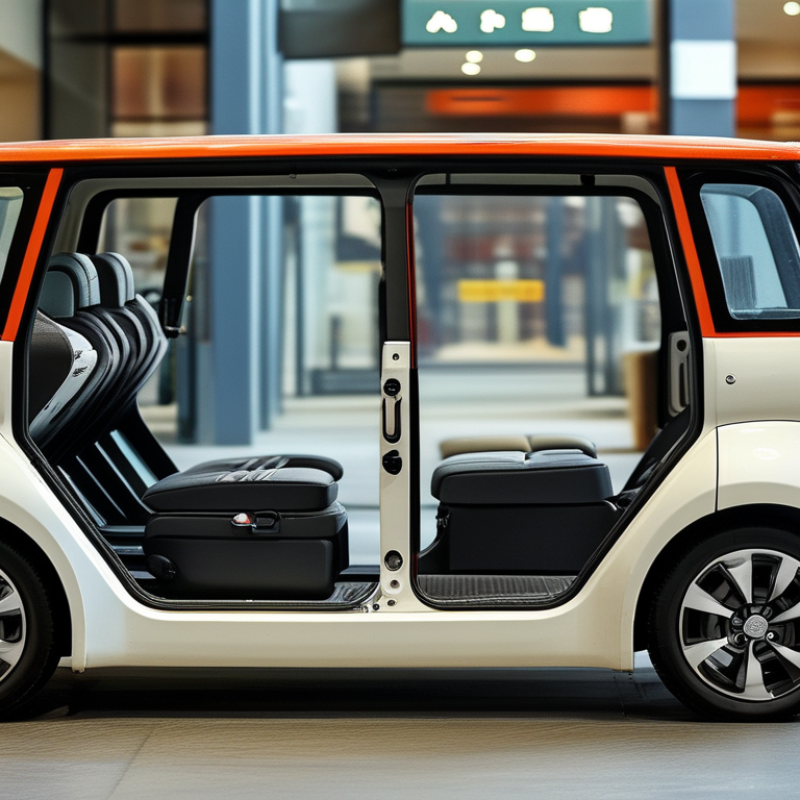
A two-seat small car is designed for compact urban travel, short commutes, and limited parking spaces. It normally has one front row, a small exterior footprint, and efficient energy use. Some models use electric power, while others use conventional systems. The category is not defined by appearance alone. Battery layout, safety structure, driving range, and registered vehicle class also matter.
For this selection, a manufacturer must show real production experience in China. We examine factory capacity, quality-control procedures, certification records, and delivery consistency. Independent test results carry more weight than promotional claims. We also review warranty terms, spare-part access, software support, and export experience. A reliable supplier should explain battery protection, charging limits, corrosion treatment, and emergency procedures clearly.
Price is considered, but it cannot lead the ranking. A very cheap vehicle may have weak suspension or uncertain service support. That risk matters. We also compare cabin ergonomics, visibility, turning radius, braking performance, and performance on uneven city roads. Some published specifications may change between batches, so buyers should request current documents. This is an imperfect process. Factory visits, user feedback, and long-term maintenance records can reveal problems that brochures hide. The final top ten should therefore represent measurable capability, not simply online popularity or production volume.
China Top 10 Two-Seat Small Car Manufacturers: Selection Criteria
This chart presents an editorial weighting model for evaluating China’s two-seat small-car manufacturers. The criteria reflect practical selection factors: genuine two-seat product coverage, compact vehicle design, safety and regulatory compliance, electric-vehicle technology, production capability, after-sales support, export readiness, and product reliability. The percentages represent the relative importance of each criterion and are not company or brand performance data.
Market Overview of China’s Two-Seat Small Car Industry
China’s two-seat small-car industry is expanding within a much larger new-energy market. The China Association of Automobile Manufacturers reported 12.87 million new-energy vehicle sales in 2024, representing 40.9% of total vehicle sales. However, national reports rarely separate two-seat models from other mini and compact vehicles. That data gap matters.
These cars serve short urban trips, campus mobility, delivery support, and dense residential areas. Their narrow bodies can fit tighter parking spaces. Many use compact battery packs, often reducing purchase cost and charging demand. The China Passenger Car Association recorded 10.90 million new-energy passenger-vehicle retail sales in 2024. This creates a strong supply foundation for small urban vehicles.
Regional registration data remains more useful for this segment. Smaller cities and county markets often value low running costs over highway performance. Buyers also examine battery warranty terms, winter range, charging access, and cabin safety. Not every low-priced model delivers the same practical value. Some published range figures appear optimistic in heavy traffic or cold weather. Independent testing is still limited, and this weakens direct comparisons.
Policy support continues to shape demand. China’s trade-in programs and local consumption incentives can improve affordability, according to government policy documents released in 2024. Yet incentives vary by city. Manufacturers must therefore balance simple interiors, durable batteries, and compliance testing with extremely tight margins. The market looks promising, but reliable two-seat sales statistics remain unfinished.
Profiles of the Top 10 Chinese Two-Seat Small Car Manufacturers
China’s two-seat small-car sector includes ten notable manufacturer profiles, each serving a different urban need. The first focuses on compact electric commuters with simple dashboards and narrow bodies. The second develops low-speed neighborhood vehicles, often using sealed batteries and easy-to-repair panels. The third specializes in export-oriented microcars, offering multilingual manuals and basic parts support. The fourth builds sporty two-seat models with sharper suspension tuning and small cargo spaces. The fifth emphasizes affordable city transport, with washable interiors and uncomplicated controls.
The sixth manufacturer targets fleet buyers, producing durable vehicles for campuses, resorts, and industrial parks. The seventh combines small-car production with battery research, although real-world range may vary in cold weather. The eighth offers enclosed cabins, useful during heavy rain, but ventilation deserves careful inspection. The ninth focuses on lightweight construction, reducing energy use while sometimes compromising cabin insulation. The tenth develops customizable platforms for local distributors. Its technical flexibility is promising, yet long-term service data can be limited. This is not a perfect ranking. Factory capacity, quality consistency, and after-sales performance can change quickly.
Tips: Check battery warranty terms, charging compatibility, brake performance, and corrosion protection before purchasing. Ask for independent inspection records and a clear spare-parts schedule. Measure the cabin personally; two seats can still feel surprisingly tight. Test the car on uneven roads, not only inside a showroom. Also, confirm local registration requirements and winter performance.
China Top 10 Two-Seat Small Car Manufacturers? - Profiles of the Top 10 Chinese Two-Seat Small Car Manufacturers
| No. |
Anonymous Manufacturer Profile |
Typical Two-Seat Vehicle Segment |
Powertrain Focus |
Typical Battery Capacity |
Published Driving Range |
Typical Maximum Output |
Charging Characteristics |
Typical Vehicle Length |
Main Manufacturing Region |
| 1 |
Profile A |
Ultra-compact urban electric car |
Battery-electric, rear-wheel drive |
Approximately 9–14 kWh |
Approximately 120–200 km CLTC or equivalent test cycle |
Approximately 20–30 kW |
AC charging; some versions support optional DC charging |
Approximately 2.5–2.7 m |
Guangxi and South China production clusters |
| 2 |
Profile B |
Two-seat low-speed city commuter |
Battery-electric, rear-wheel drive |
Approximately 10–16 kWh |
Approximately 150–220 km CLTC or equivalent test cycle |
Approximately 25–35 kW |
Household AC charging; portable charging cable commonly available |
Approximately 2.6–2.8 m |
Anhui and East China production clusters |
| 3 |
Profile C |
Compact two-seat electric hatchback |
Battery-electric, front-wheel drive |
Approximately 13–18 kWh |
Approximately 170–250 km CLTC or equivalent test cycle |
Approximately 25–40 kW |
AC charging; higher trims may offer faster charging support |
Approximately 2.8–3.0 m |
Jiangsu and Zhejiang production clusters |
| 4 |
Profile D |
Micro electric city vehicle |
Battery-electric, rear-wheel drive |
Approximately 10–15 kWh |
Approximately 150–205 km CLTC or equivalent test cycle |
Approximately 20–30 kW |
Single-phase AC charging; charging from a domestic socket is common |
Approximately 2.5–2.8 m |
Shandong and North China production clusters |
| 5 |
Profile E |
Premium-oriented two-seat micro EV |
Battery-electric, rear-wheel drive |
Approximately 14–20 kWh |
Approximately 180–260 km CLTC or equivalent test cycle |
Approximately 30–45 kW |
AC charging; selected configurations support DC fast charging |
Approximately 2.7–3.0 m |
Guangdong and South China production clusters |
| 6 |
Profile F |
Commercial and fleet-focused two-seat EV |
Battery-electric, front-wheel drive |
Approximately 15–22 kWh |
Approximately 180–260 km CLTC or equivalent test cycle |
Approximately 30–45 kW |
AC charging with fleet depot charging compatibility |
Approximately 2.8–3.1 m |
Henan and Central China production clusters |
| 7 |
Profile G |
Entry-level two-seat urban EV |
Battery-electric, rear-wheel drive |
Approximately 8–13 kWh |
Approximately 100–180 km CLTC or equivalent test cycle |
Approximately 15–25 kW |
Basic AC charging; short-distance urban use is the primary application |
Approximately 2.4–2.7 m |
Shandong and Hebei production clusters |
| 8 |
Profile H |
Safety-upgraded micro electric car |
Battery-electric, rear-wheel drive |
Approximately 13–18 kWh |
Approximately 160–230 km CLTC or equivalent test cycle |
Approximately 25–35 kW |
AC charging with battery thermal and electronic management systems |
Approximately 2.7–2.9 m |
Jiangxi and East-Central China production clusters |
| 9 |
Profile I |
Export-oriented two-seat compact EV |
Battery-electric, front-wheel drive |
Approximately 15–25 kWh |
Approximately 180–280 km under the applicable test cycle |
Approximately 30–50 kW |
AC charging; charging-port specifications vary by export market |
Approximately 2.8–3.2 m |
Zhejiang and coastal export manufacturing clusters |
| 10 |
Profile J |
Lightweight urban mobility EV |
Battery-electric, rear-wheel drive |
Approximately 9–16 kWh |
Approximately 130–220 km CLTC or equivalent test cycle |
Approximately 20–35 kW |
AC charging; compact battery packs support lower operating costs |
Approximately 2.5–2.9 m |
Fujian and South-Eastern China production clusters |
Note: The profiles are anonymized to exclude company and brand names. Figures are rounded representative specifications from publicly documented Chinese two-seat micro-EV configurations; actual specifications vary by model year, trim level, battery chemistry, homologation standard, and market.
Comparison of Models, Specifications, Prices, and Key Advantages
China Top 10 Two Seat Small Car Manufacturers: Models, Specifications, Prices, and Key Advantages
China’s leading two-seat small-car manufacturers compete mainly in urban mobility. Public rankings are imperfect because industry databases rarely separate two-seat models from wider micro-EV portfolios. This shortlist therefore considers production scale, export activity, model availability, specifications, and after-sales coverage. The China Association of Automobile Manufacturers reported 12.87 million new-energy vehicle sales in 2024, showing strong market depth.
Most models use a 20–50 kW motor and a 9–17 kWh battery. Claimed driving ranges usually reach 120–300 km under CLTC testing. Real range can fall sharply in winter or heavy traffic. Prices commonly start near RMB 35,000 and reach RMB 100,000 for better-equipped versions. Small footprints matter. Many cars measure about 2.5–3.0 metres long, fitting narrow residential parking spaces. Charging is often slow, though selected versions support faster direct-current charging.
Key advantages differ across the ten manufacturers. Some focus on low purchase prices and simple maintenance. Others offer stronger safety structures, larger batteries, air conditioning, and smartphone connectivity. Export-oriented suppliers often provide left-hand-drive configurations and multilingual documentation. CAAM data confirms rapid NEV expansion, but it does not prove every manufacturer has equal reliability. Battery warranty terms, crash-test evidence, spare-parts access, and dealer response deserve closer inspection. The cheapest model may not be the best value. That remains easy to overlook.
Innovation and Future Trends in China’s Two-Seat Small Car Market
China’s two-seat small-car market is becoming a practical test ground for urban mobility. In 2024, China’s new-energy vehicle sales reached 12.87 million units, according to the China Association of Automobile Manufacturers. However, official data rarely separates two-seat models. That gap makes market measurement imperfect.
Innovation is moving beyond smaller batteries. Lightweight bodies, swappable components, connected dashboards, and tighter turning circles suit crowded city streets. The International Energy Agency reported that China accounted for more than half of global electric car sales in 2023. This scale can reduce component costs, but affordability remains uneven. A two-seat car may save parking space, yet limited range can restrict family use. That weakness deserves more attention.
Tips: Check battery warranty, real-world range, charging access, and safety certification before buying. Compare winter performance, not only showroom figures. Ask whether software updates remain available after purchase.
Future development will likely focus on low-speed urban travel, shared mobility, and delivery services. Battery recycling and repair networks will become important as sales grow. Policymakers may also need clearer definitions for microcars and quadricycles. Without consistent categories, investors and consumers may misread demand. The market looks promising, but enthusiasm should not replace field testing.