How to Choose the Best Electric Solo Car for Your Needs?
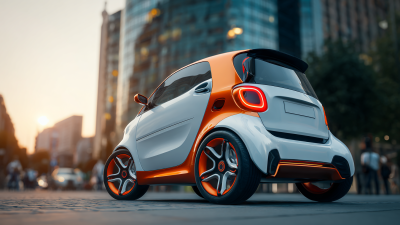
Choosing the right Electric Solo Car can be overwhelming. Many factors influence your decision. These include budget, range, and features. Electric Solo Cars are becoming popular for city driving. They are compact, efficient, and easy to park.
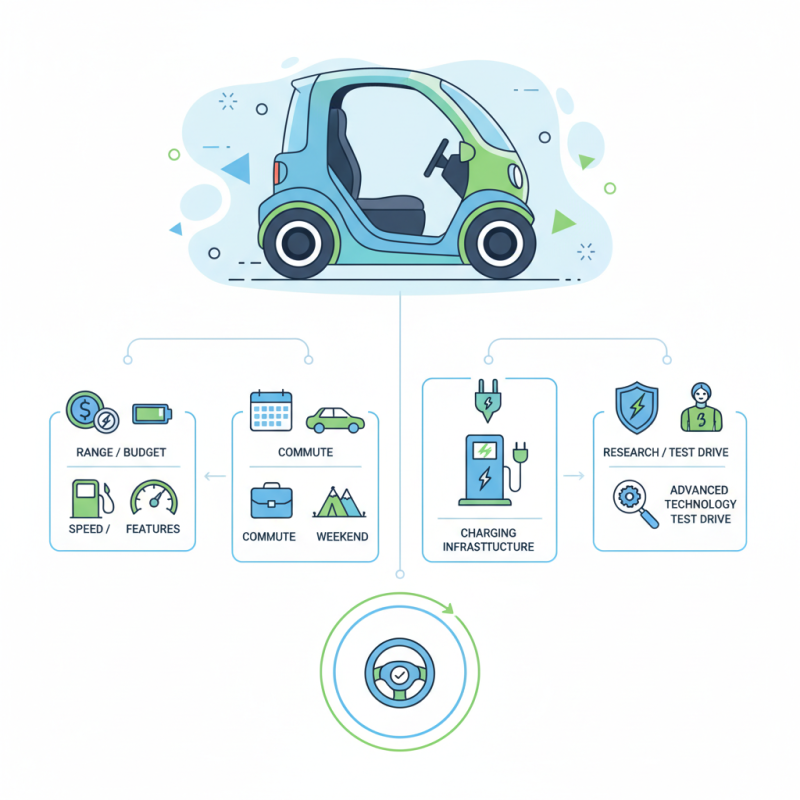
Consider what you need most. Do you want a longer battery life? Or perhaps, higher speed? Reflect on your daily usage. Are you commuting, or do you need a weekend getaway vehicle? Think about the charging infrastructure in your area. Accessibility can impact your driving experience.
Additionally, safety features should not be overlooked. Many models offer advanced technology to enhance your security. However, some options may lack essential elements. It’s crucial to do thorough research. Test drives can help reveal shortcomings and strengths. Evaluating various models will aid in making an informed choice.
Understanding Your Driving Needs and Lifestyle Choices
When choosing an electric solo car, understanding your driving needs is essential. Think about your daily routine and lifestyle choices. Do you need a vehicle for short trips or long commutes? Consider how often you drive and the distance. This knowledge will guide you in selecting the right model.
Tips: Start by evaluating your average miles driven per week. A compact model may suffice for city dwellers. If you travel frequently, a car with a longer range is crucial. Also, assess your charging options. Do you have a charging station at home? If not, find out the availability of chargers in your area.
Reflect on your personal preferences too. Do you carry passengers often? If yes, roomier models may be more suitable. Additionally, think about your budget. It's easy to get swayed by flashy features but remember, practicality matters. Focus on a balance between performance and cost-effectiveness.
Comparison of Electric Solo Cars Based on Key Features
Exploring the Range of Electric Solo Cars Available in the Market
The electric solo car market is growing rapidly. According to recent industry reports, global sales of electric vehicles are projected to reach over 30 million units by 2030. This significant rise reflects increasing consumer interest in environmentally friendly options. In many urban areas, these compact cars can easily navigate tight spaces. They offer impressive energy efficiency, often exceeding 100 miles per gallon equivalent.
Different models cater to diverse needs. Some solo cars focus on affordability, while others target luxury and advanced features. Studies show that many buyers are concerned about range anxiety. Most solo cars now offer between 100 to 250 miles per charge. Battery technology is improving, but some manufacturers still struggle to provide sufficient range for daily commutes.
In terms of performance, the acceleration of electric solo cars is often surprisingly quick. However, not all models are created equal. Some lack the necessary space for storage or passenger comfort. Potential buyers should consider their driving habits carefully. Does the car meet your daily travel needs? It's crucial to weigh both budget and functionality. In the end, personal requirements significantly influence the best choice.
Evaluating Key Features: Battery Life, Performance, and Safety
When choosing an electric solo car, battery life is crucial. A longer battery life means less frequent recharging. Factors include battery capacity and efficiency. Some models may promise impressive ranges but may not deliver in real-world conditions. It's essential to research and read user reviews. You want a vehicle that fits your daily commuting needs without range anxiety.
Performance should also be considered. Acceleration and handling vary significantly between models. Some cars may feel sluggish, especially when fully loaded. Look for specifications such as horsepower and torque. Test drives offer valuable insights but remember, what feels good in a short ride may not translate to everyday use. Reflections on performance can help identify possible flaws that surface over time.
Safety features are non-negotiable. Check for advanced safety technologies like automatic braking and lane-keeping assist. While some cars have numerous safety features, others might have missed the mark. Crash test ratings provide a clear picture. However, these ratings don’t tell the entire story. Personal experiences and real-life scenarios often reveal unseen vulnerabilities. Balancing these factors ensures you choose a reliable solo car that meets your unique requirements.
Comparing Costs: Purchase Price, Maintenance, and Incentives
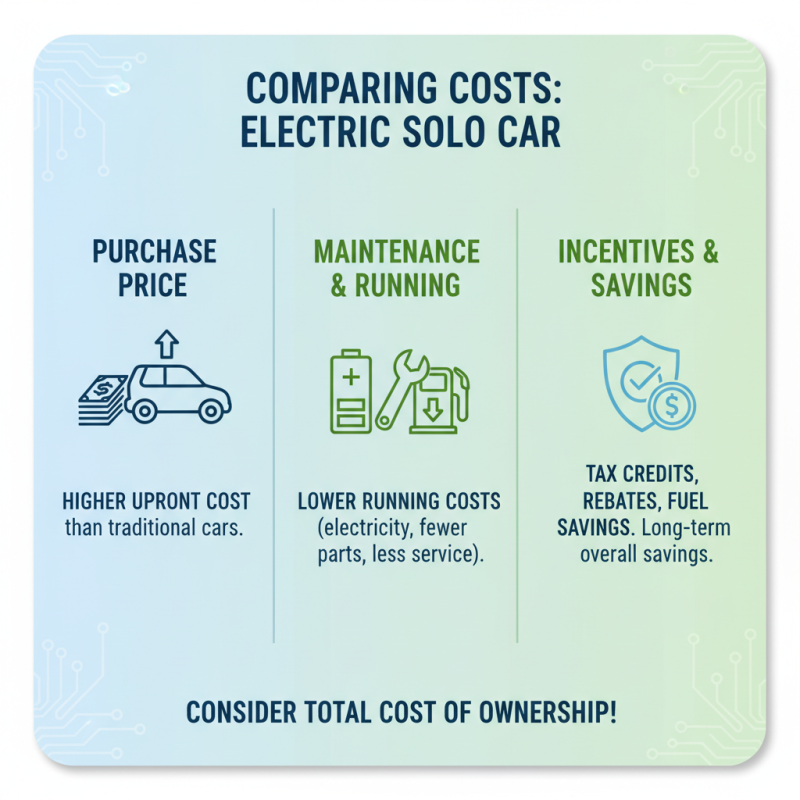
When choosing an electric solo car, understanding costs is crucial. The purchase price is often the first thing potential buyers consider. Many electric vehicles come with a higher upfront cost than traditional cars. However, lower running costs can make up for this difference over time.
Maintenance is another area to evaluate. Electric solo cars generally require less maintenance than gas vehicles. They have fewer moving parts and no oil changes. Nevertheless, battery replacement can be expensive. It's essential to check the warranty terms for battery life and replacement costs.
Incentives can also play a significant role in the overall cost. Various government programs provide tax credits or rebates, making electric purchases more accessible. However, these incentives vary by region. Buyers should research the latest offerings in their area to maximize savings. Reflecting on these factors will help narrow down choices and find the right fit.
Test Driving and Assessing Comfort: Finding Your Perfect Fit
Finding the right electric solo car requires careful consideration.
Test driving is key to understanding which model suits you best. A good fit should provide comfort and ease of handling.
During your test drive, listen for unusual sounds. Pay attention to how the car responds to your commands.
A smooth ride matters, but don't ignore the nuances.
Assessing comfort is more than just cushy seats. Check how the car feels in various driving conditions. Take it through tight corners and straightaways.
Notice if your posture changes over time. Can you reach the pedals without strain? Take breaks to reflect on your experience.
Gather your thoughts after driving.
Interior space can also influence your choice. Ensure you have enough room for your daily needs.
If you plan to drive long distances, storage matters. Sometimes the smallest details make the biggest difference.
Look for features that enhance your comfort level. Open the windows, feel the airflow, and see how the climate control works.
It’s all about personal preference and finding that perfect fit.