
head_banner

How to Choose the Best Small Electric Trike for Your Needs?

Choosing the right Small Electric Trike can be overwhelming. The market is flooded with options, each claiming to be the best. According to a recent report by the Electric Bicycle Industry Association, the demand for electric trikes has increased by 25% over the past year. This surge reflects a growing need for eco-friendly transportation solutions.

When selecting a Small Electric Trike, consider your specific requirements. Factors such as range, weight capacity, and design play critical roles in your decision. Some models excel in urban commuting, while others cater to recreational use. The speed and battery life can vary significantly between models. Consumer insights reveal that 60% of buyers prioritize comfort over speed, highlighting a shift in user preferences.

It's also essential to understand the limitations of various models. Not all trikes are built for rugged terrain. Some may struggle with steep hills or uneven surfaces. Reflecting on these aspects helps narrow down your options. Ultimately, the ideal Small Electric Trike should align with your lifestyle and needs, offering both functionality and enjoyment.
How to Choose the Best Small Electric Trike for Your Needs?

Understanding the Different Types of Small Electric Trikes Available

When selecting a small electric trike, it's essential to understand the various types available. Electric trikes are not all the same. Some are designed for urban commuting, while others focus on recreational use. A report by the National Institute for Transportation suggests that 40% of electric bike users prefer trikes for stability. This highlights the growing need for a diverse range of options.

There are three primary types of small electric trikes: foldable, cargo, and hybrid models. Foldable trikes are compact, making them ideal for city dwellers with limited storage. Cargo trikes often come with added space for transporting goods. They can carry heavy loads, making them popular for errands. Hybrid models combine features of both, providing versatility for urban and recreational use.

Yet, choosing the right type involves considering personal needs. Some might find cargo trikes too bulky for daily use. Others may feel foldable trikes lack comfort for longer rides. Additionally, the weight capacity can vary significantly across models. A significant percentage of consumers report regretting their initial choice after realizing the limitations of their selected trike. Evaluating these aspects can lead to a more satisfying purchase experience.

How to Choose the Best Small Electric Trike for Your Needs?

Trike Type Weight Capacity Range per Charge Top Speed Battery Type Recommended Use
Folding Electric Trike 300 lbs 25 miles 15 mph Lithium-ion Urban commuting
Cargo Electric Trike 400 lbs 40 miles 12 mph Lead-acid Shopping and delivery
Standard Electric Trike 350 lbs 30 miles 18 mph Lithium-ion Recreational riding
Off-Road Electric Trike 350 lbs 22 miles 20 mph Lithium-ion Trail riding

Evaluating Key Features for Your Small Electric Trike Selection

Choosing the right small electric trike involves careful consideration of key features. Start with the battery life. A reliable battery can significantly impact your riding experience. Look for a trike that offers a sufficient range to suit your daily needs. For example, a 30-mile range may suffice for some, while others may need more. Range matters.

Next, evaluate the weight capacity. Ensure the trike can handle your weight plus any additional cargo. Some trikes might look sturdy but falter under heavier loads. Pay close attention to the build quality. A durable frame can withstand bumps, while a lightweight model might be easier to maneuver.

Comfort is often overlooked but is crucial. Test the seat and handlebars before making a decision. Some options can feel cramped or uncomfortable. Additionally, the trike's size should match your height and riding style. Don't hesitate to take a test ride. Finding the perfect fit can make your experience enjoyable. Consider these details as part of your selection process. They can significantly influence your satisfaction.

Electric Trike Features Comparison

Assessing Your Budget and Cost Considerations for Electric Trikes

Assessing your budget for an electric trike requires careful consideration. The average price range for small electric trikes varies from $600 to $2,000. This pricing reflects different specifications and capabilities. A lower-cost trike may lack advanced features. A high-end model might include better battery life or enhanced safety features.

When setting a budget, think about additional costs. Maintenance and potential repairs can add up over time. Data from industry reports state that maintenance costs can range from $50 to $200 annually, depending on usage. Some might overlook this aspect. Battery replacement costs can also impact your finances. A new battery could cost $300 or more, which should factor into your long-term plan.

Understanding your usage needs greatly influences what you should spend. If you plan to use the trike daily, investing more may pay off. For occasional use, a lower-budget option may suffice. It's essential to reflect on how often you will ride. A trike that meets your lifestyle could save you from unnecessary expenses down the line. Being realistic about these factors will help you make a more informed choice.

Determining the Ideal Size and Weight Capacity for Your Needs

How to Choose the Best Small Electric Trike for Your Needs?

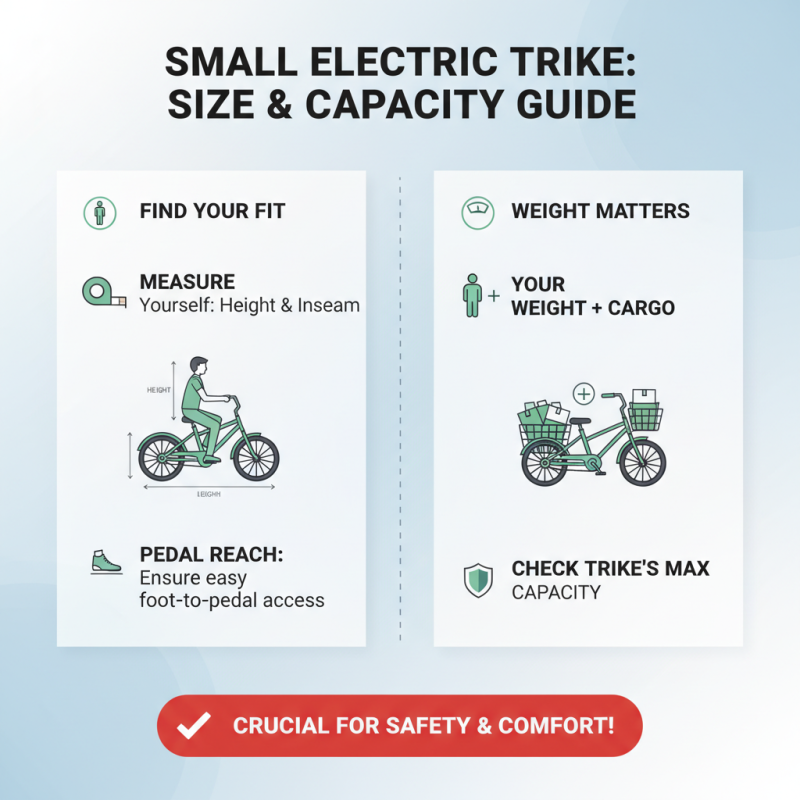
Choosing the right size and weight capacity for a small electric trike is crucial. You want a model that fits your body comfortably. Measure your height and inseam. Ensure that you can reach the pedals easily. Additionally, take into account the trike’s weight capacity. This includes not only your weight but also any cargo you might carry.

Tips: Check the manufacturer’s specifications. They often provide guidance on optimal sizing. It’s good to have a bit of wiggle room. If your weight is close to the maximum limit, consider a sturdier model. Riding a trike that feels cramped can be uncomfortable.

Your lifestyle also matters. Are you commuting or using it for leisure? Heavy-duty models may support more weight and last longer. However, they can be heavier and harder to maneuver. Think about where you’ll be riding. Heavy traffic areas may require a more agile trike. Always test ride before buying. Feel how it handles and fits your needs.

Comparing Popular Brands and Models of Small Electric Trikes

How to Choose the Best Small Electric Trike for Your Needs?

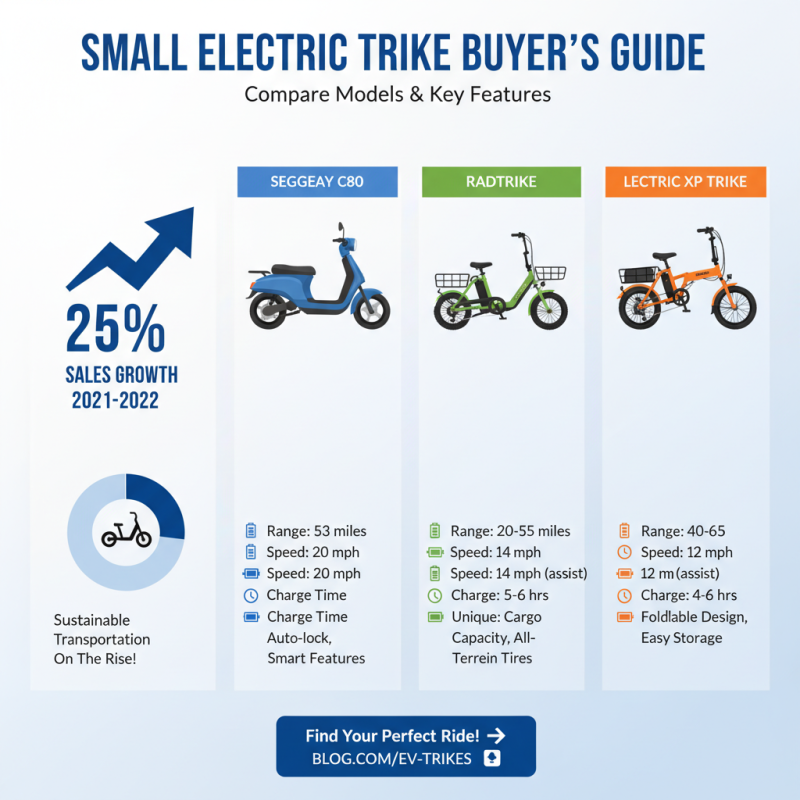
When selecting a small electric trike, it's essential to compare popular brands and models to determine what suits your needs. Recent industry data shows that small electric trikes are gaining popularity, with a 25% increase in sales from 2021 to 2022. This growth indicates a keen interest in sustainable transportation options among consumers.

Performance and range are crucial. Many models offer a range of 30 to 50 miles on a single charge. Battery life varies significantly among brands. Efficiency ratings can differ widely. Check the wattage of the motors, too. A higher wattage often translates to better performance, especially on inclines.

Tips: Look for user reviews. They provide insights that technical specs may not cover. Find models with adjustable seats for comfort. Don't overlook weight capacity; it affects stability and performance. Consider your typical riding conditions. If you plan on using your trike in urban areas, a more compact design may be beneficial.

Some popular models come with additional features, such as built-in storage. However, these can add to the weight. A heavier trike may feel less agile. Reflect on what features matter most for your daily use. Prioritize them in your search.